
Black Speculative Futures: On Building the 2026 African American Read-In
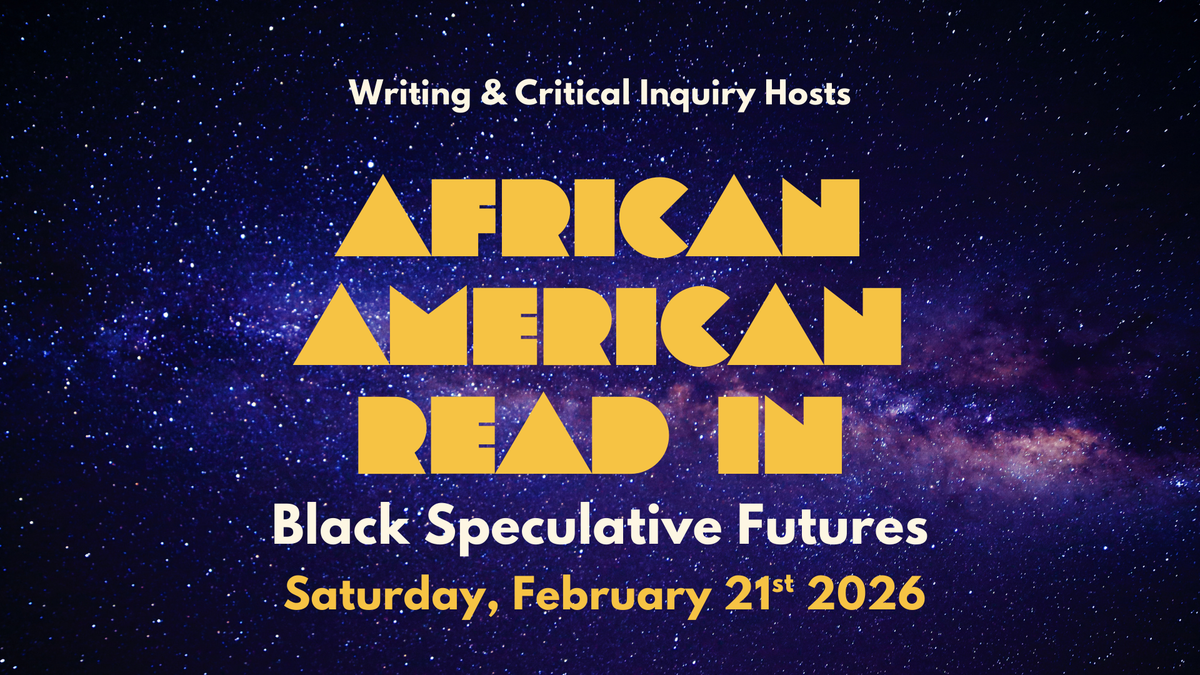
I began planning the 2026 African American Read-In in the fall.
Not because February sneaks up on anyone who works in higher education — though it does — but because I knew I wanted this year’s Read-In to do something more than mark a date on the calendar. The African American Read-In is a national initiative of the National Council of Teachers of English, established in 1990 as a nationwide literacy effort to celebrate African American literature It is the oldest national event dedicated to diversity in literature. That history matters to me. It situates our campus inside something larger, something sustained.
But tradition alone is not enough and I did not want to replicate a template. I wanted to intervene. So in the fall, I began asking myself: if we are participating in this national literacy movement, what is our intellectual contribution? What does this moment require — not abstractly, but here, in Albany, in this political climate, with these students?
The answer that kept returning was futurity.
I chose the theme “Black Speculative Futures” because speculative literature is not an escape hatch. It is a diagnostic tool that allows us to examine race, power, memory, and history while simultaneously imagining what might exist beyond them. In a city layered with erased Black neighborhoods, submerged archives, and half-told stories, speculation becomes a method of repair. It asks: what was buried? What could be otherwise?
Once the theme crystallized, I secured the infrastructure. I applied for and received two university awards to fund the program. I say that plainly because funding matters and shifts the scale of what is possible. It signals institutional investment and allows you to curate deliberately instead of improvising under constraint. When Black literary programming is funded, it is no longer symbolic. It becomes structural.
That distinction is important to me.
The Program in Writing and Critical Inquiry hosted the event, but I wanted the Read-In to extend beyond one program’s borders. I invited artists whose work embodies speculative practice in real time: B. Sharise Moore, Marcus Kwame Anderson, and D. Colin. Each of them works at the edge of genre — poetry that refuses containment, graphic narrative that redraws historical memory, performance that makes the body itself an archive.
Their presence changed the room.
Faculty contributors — Janell Hopson, Kyra Gaunt, El-Ra Radney — alongside Assistant Vice President Latonia Spencer joined in conversation. Students and faculty read their own work, as well as the work of authors such as Octavia Butler and Tananarive Due at the closing open mic. What moved me most was not the polish of the readings but the shift in posture. Students who are often tentative became deliberate. They read as if they understood themselves not only as consumers of Black literature, but as participants in its future.
That shift does not happen accidentally. It happens when a space is prepared with care.
The University Libraries supported the event with a curated display and expanded collection development aligned with the theme. That detail might seem procedural, it is not. It means the work lingers. It means that long after the microphone is packed away, the books remain. It means the Read-In seeps into syllabi, research projects, and quiet afternoons in the stacks.
The institutional recap notes that the 2026 Read-In affirmed storytelling as both archive and prophecy. That phrasing resonates deeply with me because it names what I was trying to hold. Archive and prophecy. Past and possible. Grounded and speculative.
Organizing this Read-In was not separate from my scholarship; it was an articulation of it. My work lives at the intersection of Black speculative thought, place-based inquiry, and pedagogical design. The Read-In became a public convergence point for those threads. It allowed me to situate our campus within a national literacy movement while also rooting the event in Albany’s particular intellectual and cultural terrain.
I began planning in the fall. I secured funding. I framed the theme. I curated the voices. And in February, I watched the architecture hold.
Planning is already underway for 2027, which will explore “Black Dimensions of Health” through literature, film, art, and community dialogue. But this year marked something specific for me. It affirmed that speculative inquiry belongs not at the margins of institutional life, but at its center. Black literature is not decorative. It is imaginative infrastructure. It is a technology for surviving the present and drafting what comes next.
And this year, we made that visible.